If you visit Korea or become friends with Koreans, you may notice that some everyday conversations feel very different from what you’re used to. These Korean cultural habits often surprise first-time visitors, but each one has a meaningful cultural reason behind it. Understanding them will help you enjoy your time in Korea and communicate more naturally with local people.
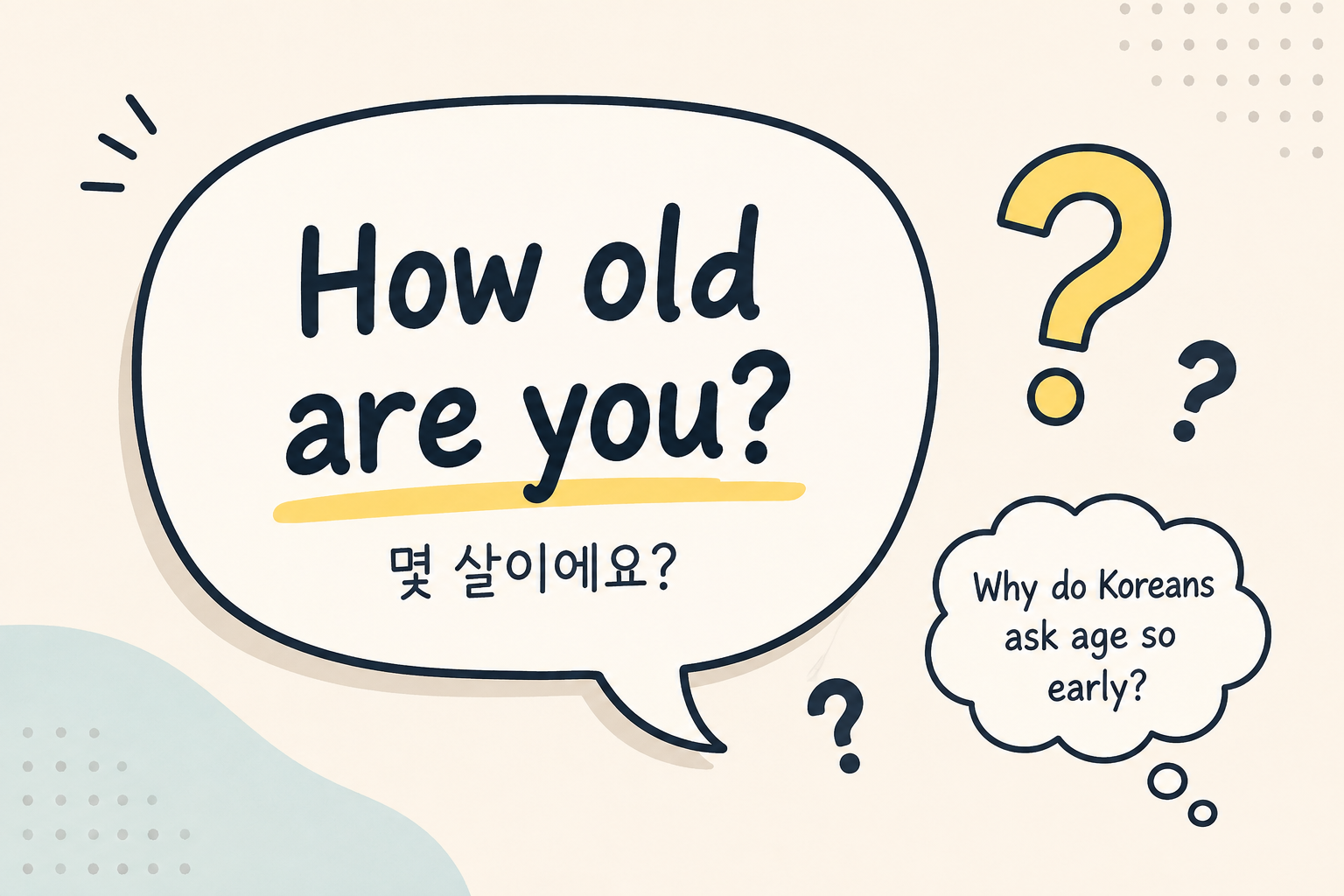
1. “How old are you?” might be one of the first questions
One of the biggest surprises for foreigners is being asked, “How old are you?” only a few minutes after meeting someone.
In many countries, age is considered private information. In Korea, however, knowing someone’s age helps people choose the appropriate level of politeness when speaking. The Korean language has different speech levels depending on age and social relationships, so asking your age is usually a sign of respect rather than curiosity.
If someone asks your age, don’t feel uncomfortable. They’re simply trying to speak politely.
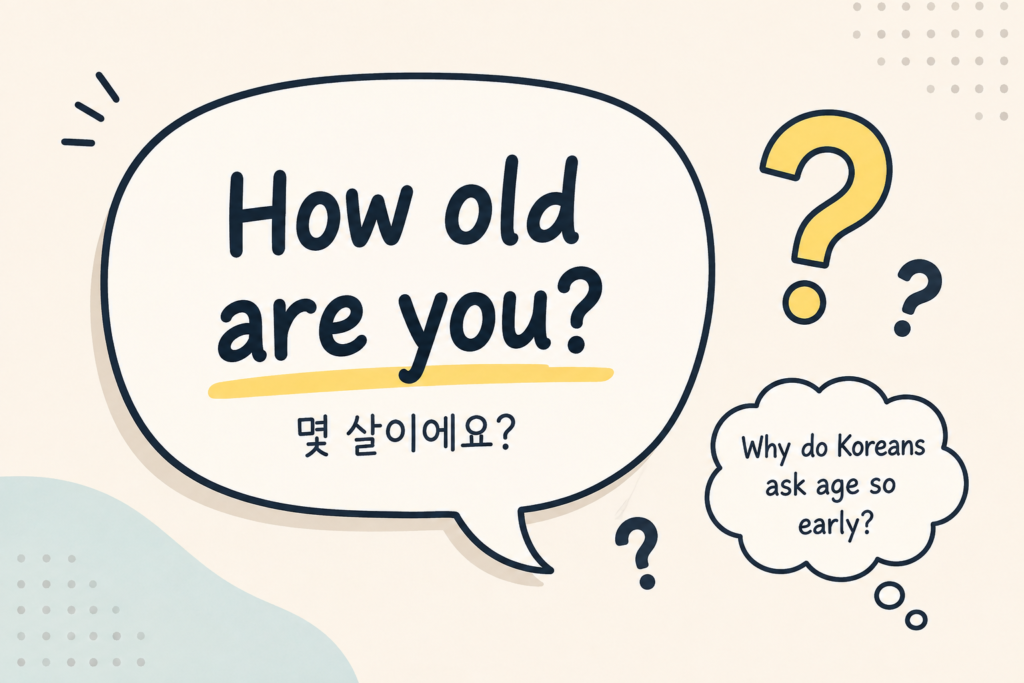
2. “Have You Eaten?” Doesn’t Always Mean They’re Inviting You to Eat
Another common surprise is hearing someone ask, “Have you eaten?”
Many foreigners think this is an invitation to lunch or dinner, but in most situations it isn’t.
Historically, food was closely connected to people’s well-being in Korea. Asking whether someone has eaten became a simple way of showing care and concern. Today, it is often similar to asking, “How are you?”
A simple “Yes, thank you.” is usually the perfect response.
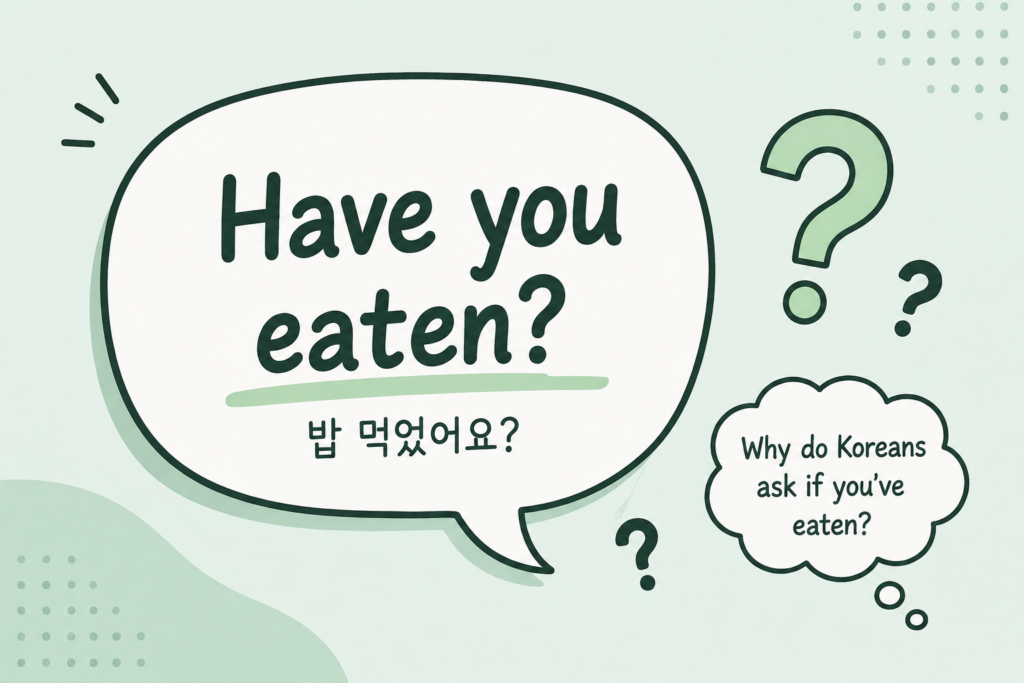
3. Koreans often refuse compliments at first
If you tell a Korean,
“Your English is amazing!”
don’t be surprised if they reply,
“No, it’s terrible.”
This surprises many foreigners.
In Korean culture, modesty is considered a positive quality. Rather than accepting praise immediately, many people downplay their abilities to show humility. It doesn’t mean they disagree with your compliment—they’re simply following a common cultural norm.
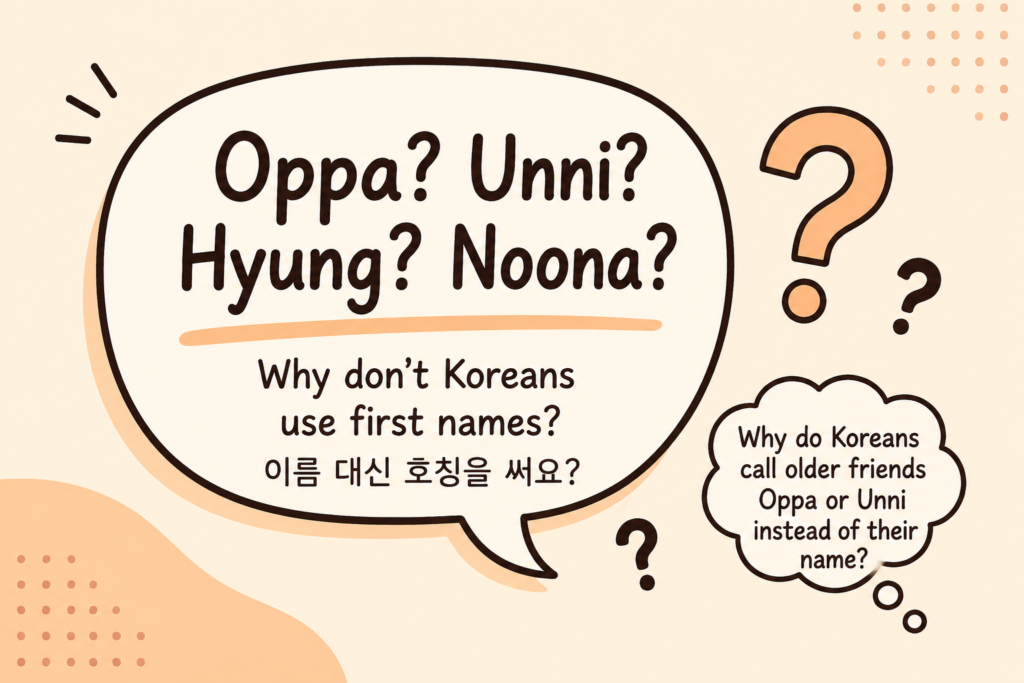
4. People rarely call older friends by their first name
In many countries, calling someone by their first name is completely normal.
In Korea, people often use relationship titles instead.
You may hear words like Oppa, Unni, Hyung, or Noona instead of a person’s name. These words show the relationship between two people and whether someone is older.
Using these titles helps create a sense of closeness while also showing respect.
5. Sharing Food Is Part of Korean Culture
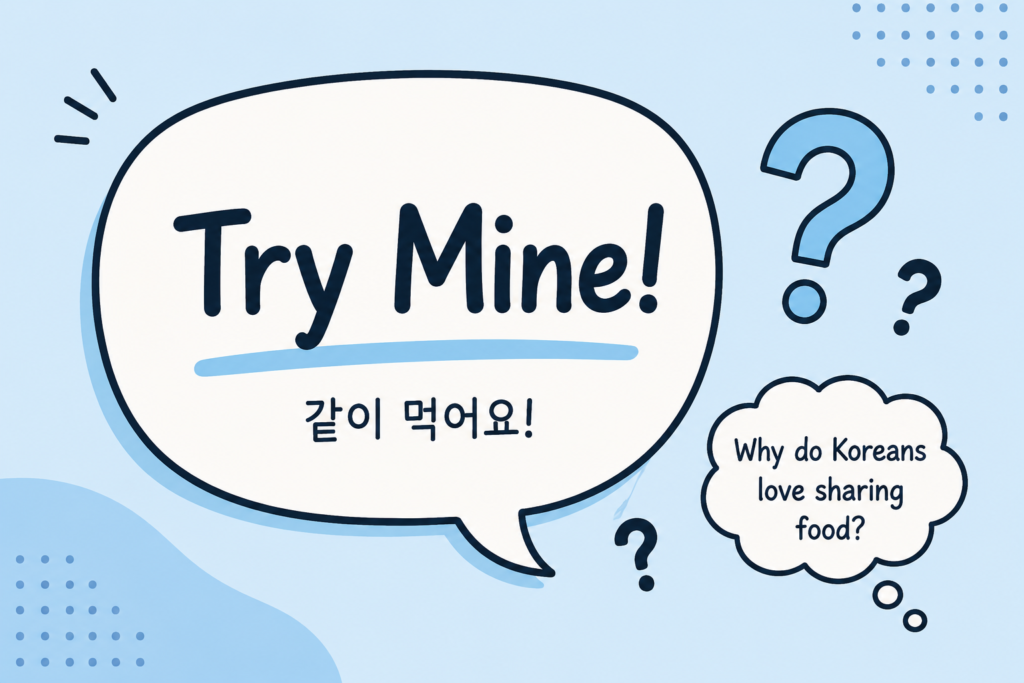
If you eat with Koreans, don’t be surprised if someone says,
“Try mine!”
Sharing food is a normal part of dining in Korea.
Friends and family often encourage each other to taste different dishes, and meals are usually enjoyed together rather than individually. Sharing food is seen as a friendly gesture and a way to build stronger relationships.
So if someone offers you a bite of their food, they’re usually being welcoming—not breaking personal boundaries.
Final Thoughts
These Korean cultural habits may feel unusual at first, but they all reflect important values such as respect, consideration, and community. Once you understand the reasons behind them, everyday conversations in Korea become much easier and more enjoyable.
If you’re planning a trip to Korea or simply want to understand Korean culture better, learning these small customs is a great place to start.
Related Posts
If you’re interested in more Korean lifestyle tips, you might also enjoy: